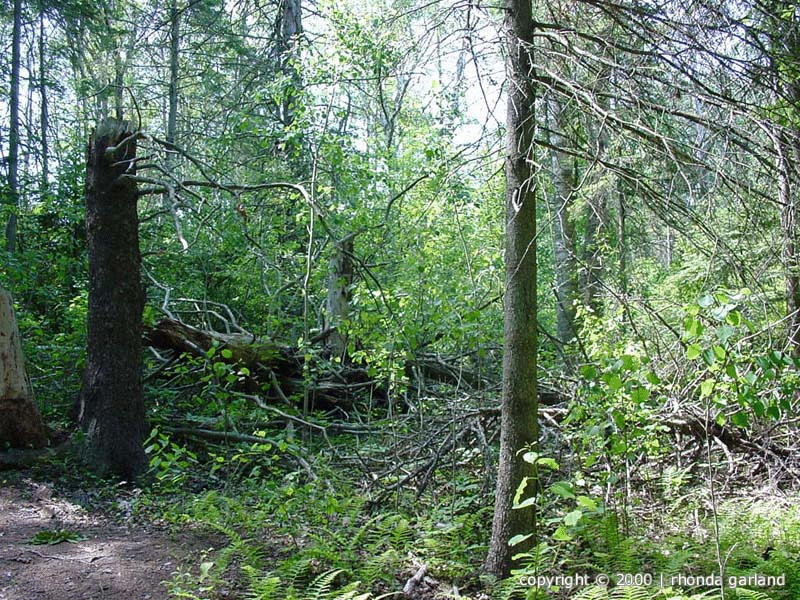
 The mixed forest in the nature trail is an example of
natural regeneration ( i.e., it was not planted). The age distribution
of the trees varies and some of the trees have died. These dead trees are
an important food resource and habitat for many species. For example, woodpeckers
feed on insects that colonize dead trees and other bird species such as
the wood duck nest in cavities in dead trees. The overstorey is a mixture
of coniferous and broadleaf trees and this has a marked influence on the
understorey vegetation ( i.e., broadleaf canopies allow
light to reach the forest floor in both spring and fall), which consists
of a number of different species in relative abundance.
The mixed forest in the nature trail is an example of
natural regeneration ( i.e., it was not planted). The age distribution
of the trees varies and some of the trees have died. These dead trees are
an important food resource and habitat for many species. For example, woodpeckers
feed on insects that colonize dead trees and other bird species such as
the wood duck nest in cavities in dead trees. The overstorey is a mixture
of coniferous and broadleaf trees and this has a marked influence on the
understorey vegetation ( i.e., broadleaf canopies allow
light to reach the forest floor in both spring and fall), which consists
of a number of different species in relative abundance.
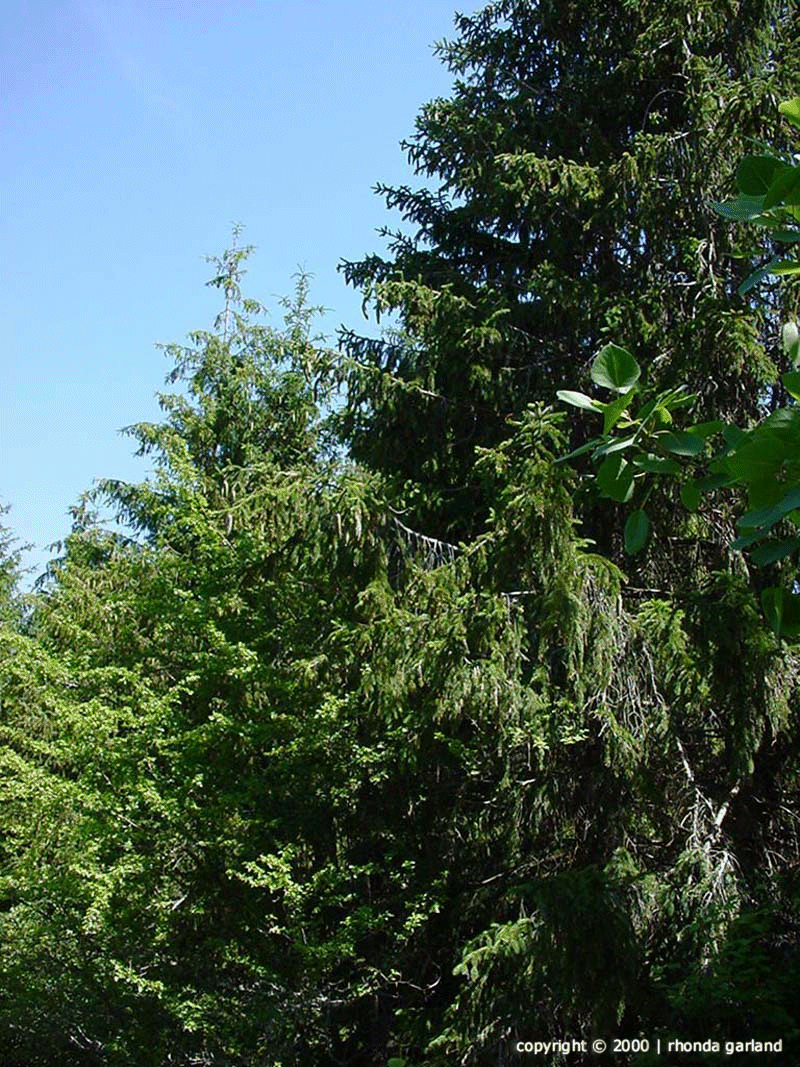
The Norway spruce plantation was planted by the forestry
department of UNB back in the 1970s. All trees are the same age and are
from a common seed source. Although Norway spruce is not commonly planted
by local forestry companies, similar red and black spruce stands are planted
by many forestry companies. Because this stand comes from a common seed
source and the trees are the same age, the entire stand is susceptible
to disease and pest problems in the future.
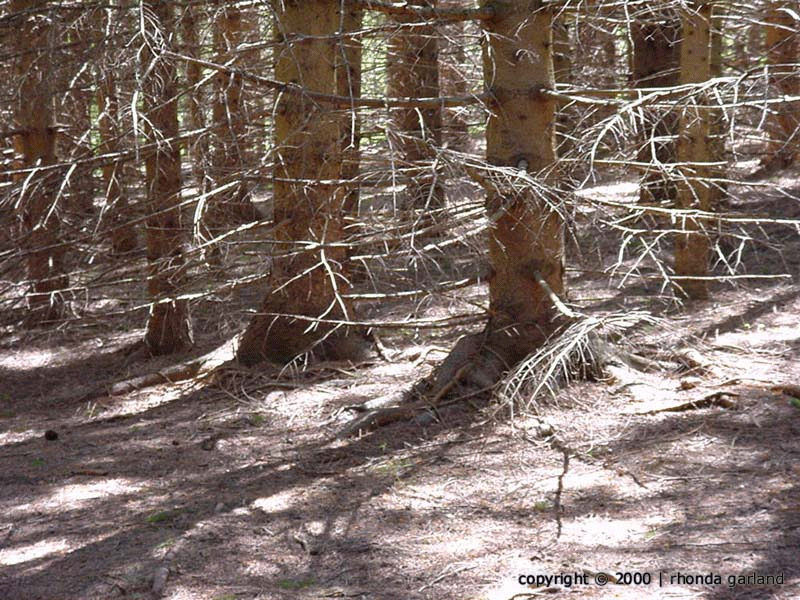
As well, the understorey
is markedly different from that of the mixed forest (see photo on right).
Soren Bondrup-Neilson of our department has been examining
how forest management practices influence beetle diversity. This study
has already identified 43 species that have never before been collected
in Nova Scotia and that 2 of these species have not been described before
(i.e., newly discovered species).
