Mussel Flats
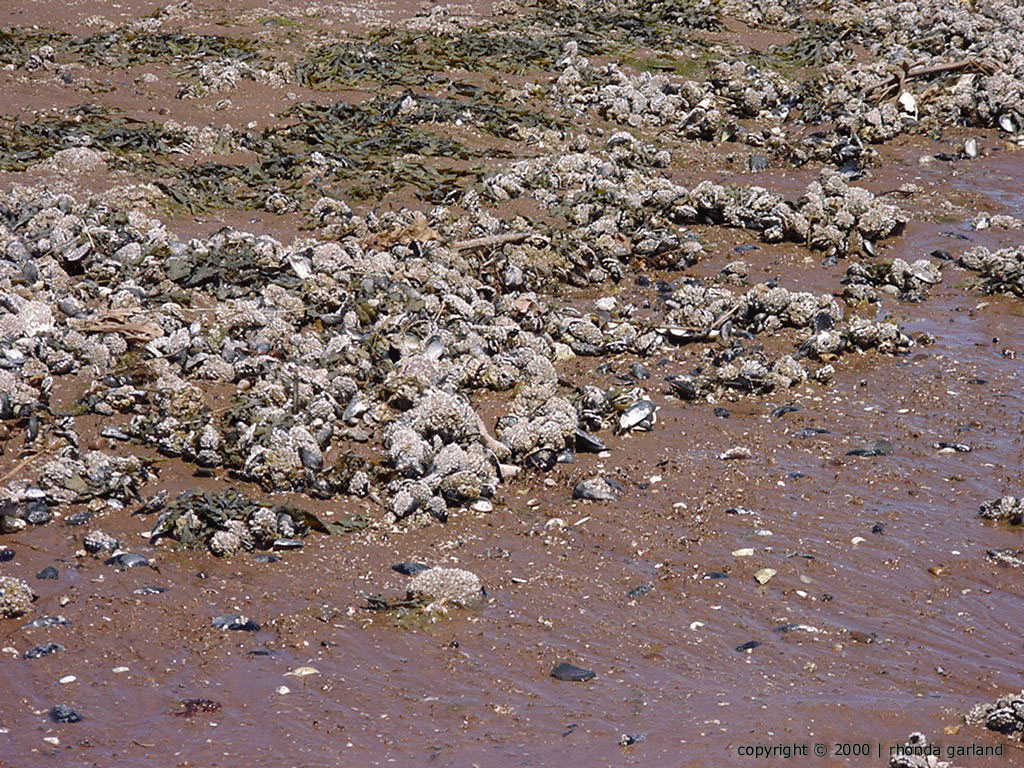 Blue mussels (Mytilus edulis) are common on rocky shores. Mussels attach themselves to the substrate by secreting byssal threads. They are not normally found on sandy or muddy shores because the substrate is not stable enough to act as an attachment site. Although it appears that the mussels have attached themselves to the sand in this area, in reality, they are attached to sandstone rocks buried beneath the surface. Other mussels then attach themselves to the first mussels forming long chains of mussels that lie on the sand. Mussels are filter feeders, eating food particles captured from the water as it flows through the mantle cavity. Mussels begin spawning in late winter and continue through spring & into late winter and continue through spring and into summer. The larvae are free swimming for several weeks, after which they settle to the substrate and secrete byssal threads to attach themselves. Although mussels are common in the inter-tidal zone, they are also found in sub-tidal areas to depths of 60 m. Because they are constantly submerged (and can feed for longer periods of time), sub-tidal mussel grow more quickly than those in the inter-tidal zone. Because mussels are limited by available attachment sites, mussel farmers can greatly increase the productivity of an area by providing nets or lines on which mussel larvae can settle. Mussels are eaten by a wide variety of animals including: crabs, sea urchins, sea stars, moon snails, gulls, sea ducks, marine mammals an dog whelks. Look for empty shells with 2 or 3 mm holes drilled in them. These were eaten by dog whelks.